
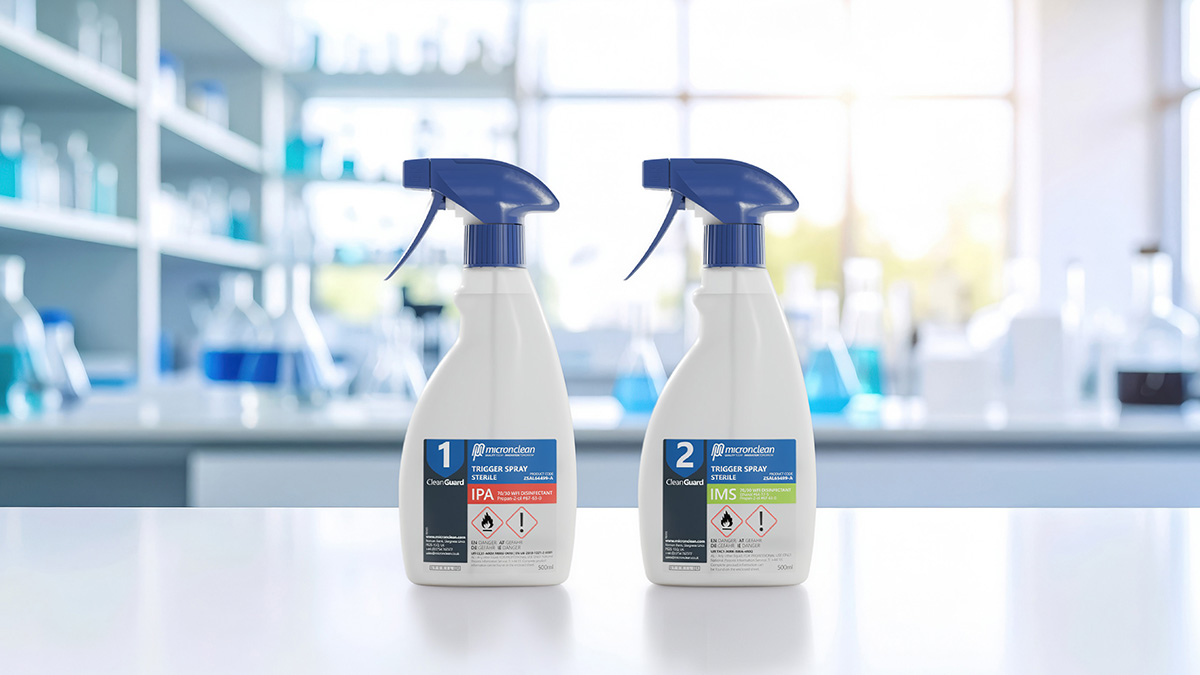
IMS vs IPA - What’s the Difference?
 13.11.2026
What are IPA and IMS?
- IPA (Isopropyl Alcohol) is a synthetic alcohol commonly used for cleaning and disinfecting.
- IMS (Industrial Methylated Spirits) is mainly ethanol with an added chemical (isopropyl alcohol) to make it toxic and unsuitable for drinking (denatured).
Both are mixed with water for better effectiveness.
How are they made?
- Both IPA and IMS (ethanol) are synthetic alcohols.
- Micronclean’s products contain synthetic alcohols, rather than fermented ones, due to the unacceptable impurity levels in fermented alcohols.
What are they used for?
- IPA is used in antiseptics, hand sanitisers, disinfectants, residue removers and pure IPA is also used for cleaning electronics and other sensitive equipment.
- IMS is used in disinfectants, preservatives, residue removers and can be used as an antiseptic, depending on what has been added to denature it.
Can both be used to disinfect surfaces?
- Yes, both can be used to disinfect surfaces.
- Both leave low surface residue.
- Both are effective at removing residue left by other disinfectants.
- Both evaporate quickly, meaning that they may need to be reapplied to achieve the recommended ‘wet contact time’.
- Both will exceed safe working limits if used in large quantities e.g. floor mopping.
- Both have bactericidal, tuberculocidal and some fungicidal efficacy.
- Both are highly effective against enveloped viruses but not against non-enveloped viruses.
- Neither has efficacy against bacterial spores and should be used alongside a sporicide.
How do they kill Microorganisms? (Mode of action)
- By making the cell membrane permeable.
- They cause cytoplasm leakage, denaturation of cell proteins and cell bursting (lysis).
- They inhibit the production of metabolites that are essential for rapid cell division.
Why are our alcohols blended with WFI water?
- The optimum concentration of alcohol for disinfection is 70% (less, or more, water and the disinfection efficacy is reduced) .
- Water slows evaporation, increasing surface contact time and enhancing effectiveness.
- Water helps to denature proteins and accelerates membrane damage.
- 70% Alcohol solutions, like Micronclean’s, produce less vapour and odour than products with higher alcohol concentration, making them safer for use in confined areas such as cleanrooms, although mopping cleanroom floors would still likely breach WEL (Workplace Exposure Levels).
Should I use IPA or IMS?
- Both IPA and IMS are effective surface disinfectants.
- Dependent on what the product needs to achieve and customer preference.
- Ethanol/water mixtures (like IMS) are less toxic than IPA/water mixtures at comparable concentrations, particularly for inhalation, skin exposure, and accidental ingestion. IPA produces stronger central nervous system effects and is generally more hazardous per unit exposure.
- In most cleanroom and GMP environments, IPA is more commonly used, however, the NHS is an exception due to historical preference reasons.
The differences between the two alcohol disinfectants are minor and mostly come down to customer preference, cost or regulatory advantages.
TKN02: IMS vs IPA - What’s the Difference? by Tasmin Crompton - Technical Lead